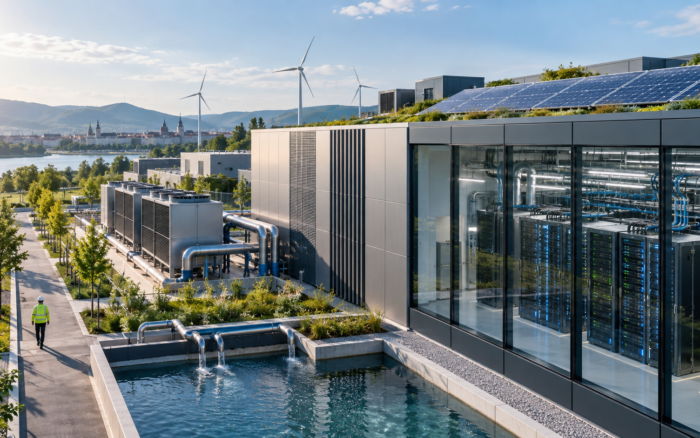
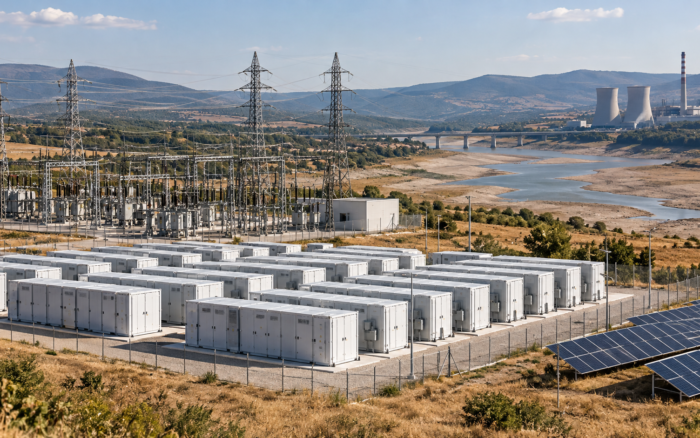
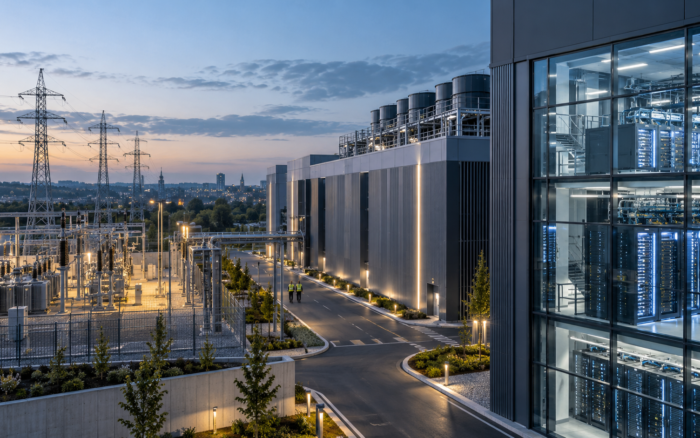
The European market is entering a new phase. Data centers are growing fast, but so are the constraints around data center land, grid access, permitting, and delivery speed. Record new capacity is coming online, yet the pressure on power and ready-to-build sites remains intense. That is why a successful data center project now depends on more than demand alone. It depends on whether the right decisions are made early, before data center construction begins, and whether those decisions can hold up under the weight of long-term data center growth, rising compute intensity, and the demands of artificial intelligence and cloud computing.
We approach that reality from the ground up. For us, the work starts with data center infrastructure that is buildable: strong grid access, scalable power capacity, secure permitting pathways, reliable network infrastructure, and sites that can support both current demand and future expansion. In a market shaped by emerging technologies, that kind of preparation is no longer a nice extra. It is the difference between a project that moves and a project that stalls.
What makes us different in the data center industry?
Many data center providers speak about opportunity. We focus on readiness. The difference matters. In today’s data center industry, power availability, grid timing, fiber connectivity, regulatory clarity, and land preparation are often more decisive than the headline appeal of a market. JLL notes that grid lead times in established European hubs can stretch up to ten years, while the cost gap for powered land continues to widen between primary and regional markets. That changes the conversation. It pushes serious investors and operators toward partners who can reduce uncertainty before it becomes expensive.
We are built around that early-stage discipline. Our role is not limited to finding plots and passing them along. We secure ready-to-build sites for data centers, with power, fiber, zoning, and permits advanced in advance, so projects can move faster and with less friction. We also work with both powered land and powered shell models, which means we can support different timelines, deployment priorities, and operational strategies instead of forcing every client into one template.
That is where trust is usually won. Not in broad claims, but in whether the fundamentals are already in place: strong fiber infrastructure, scalable power supply, realistic development logic, and a clear view of what it takes to move from site selection into execution. We see that as the real foundation of resilient data center development.
End-to-end data center solutions for investors and operators
The market no longer has one dominant model. Some clients are planning hyperscale data centers for AI and large-scale cloud services. Others are evaluating edge data centers, colocation facilities, or an enterprise data center footprint that needs more control over latency, compliance, or regional coverage. That variety matters because each model places different pressure on land, infrastructure, timeline, and operating design. A site that works for one facility type may be the wrong fit for another.
Our approach is to connect strategy with what can actually be delivered. That means looking closely at data center capacity, utility readiness, access to fiber corridors, room for expansion, and the type of facility a client wants to operate. Some projects require the flexibility of data center land from day one. Others benefit more from shell-ready structures that shorten the path to launch. In both cases, the point is the same: reduce unnecessary delay, protect capital, and create a stronger platform for future data center operations.
From strategy to execution of a data center project
A strong data center project rarely succeeds because of one dramatic decision. More often, it succeeds because dozens of early choices were handled properly: site selection, zoning, utility coordination, data center construction sequencing, fiber access, and the infrastructure needed to support data processing, data storage, storage systems, backup systems, and secure day-to-day operations. When these elements are aligned early, project timelines become more credible and operational risk becomes easier to manage.
That early discipline matters even more as Europe’s market expands. New capacity is still being delivered, but power and land remain the defining bottlenecks, especially as AI workloads intensify and operators compete for fewer truly viable sites. In that environment, execution begins long before foundations are poured.
Flexible data center solutions tailored to your needs
Not all data center facilities are built for the same purpose. Traditional data centers, modular data centers, multi tenant data centers, and large AI-oriented campuses all respond to different technical and commercial needs. Some clients prioritize maximum customization. Others need rapid deployment. Some are building for hyperscale cloud demand. Others are supporting distributed digital services closer to end users. Flexibility matters because infrastructure strategy has to follow workload strategy, not the other way around.
That is why we work across different development paths instead of treating every brief as identical. Powered land offers room to shape a project from the ground up. Powered shell supports speed while still leaving space for tailored interior fit-out, data center equipment, networking equipment, and operating configurations. In a market shaped by AI, cloud computing data centers, and new performance expectations, that flexibility is becoming an integral part of competitive delivery.
Access to premium data center land in key European growth markets
Good data center land is not just about geography. It is about whether a site can support scale, resilience, and long-term value. That means enough electrical headroom, the right power distribution path, access to fiber, environmental stability, manageable permitting, and room for future data center development. It also means being realistic about what the market now demands. In Europe, the growing shortage of properly prepared sites has made infrastructure-ready land materially more valuable than land that still needs years of work before construction can begin.
We focus on markets where this logic is strongest: locations with robust digital infrastructure, competitive energy economics, and a realistic path to deployment. Our sites are designed for scale, with support for projects ranging from 50 MW to 500 MW, making them suitable for hyperscale data centers, AI workloads, and large enterprise requirements.
Ready-to-develop data center land in key markets
Ready-to-develop land changes the economics of a project. It shortens the pre-construction phase, improves visibility around cost and timing, and reduces the number of moving parts that can slow an investment down. When utilities, permits, and connectivity are already addressed, planned data centers have a stronger chance of moving into execution without losing momentum. That is especially important in a market where the wrong site can add years to delivery.
For investors and operators, that also creates a clearer path to rapid expansion. It becomes easier to think about new facilities, follow-on phases, and future large scale facilities when the initial site has already been selected with power capacity, scalability, and infrastructure resilience in mind.
How powered land accelerates deployment timelines
Powered land matters because it removes friction where projects usually get stuck. Utility-ready access, fiber routes, and essential permits do not just save time on paper. They reduce uncertainty around development sequencing, contractor coordination, and investment timing. In a European market where grid lead times can stretch up to a decade and primary-market premiums continue to rise, shortening those early stages can materially improve project viability.
It also improves data center efficiency before operations even begin. When power strategy, connectivity, and permitting are handled upfront, it becomes easier to plan resilient cooling systems, cleaner power supply options, and a more coherent build sequence. That can support faster commissioning, stronger long-term data center operations, and lower exposure to avoidable construction risk.
Selecting the right data center locations in Europe
Choosing the right site means balancing several key elements at once. Power comes first. A modern facility needs reliable access to high-capacity infrastructure and a realistic path to expansion. Fiber comes next, because low-latency connectivity and secure internet connection routes remain essential for performance and resilience. Then come the variables that are easy to underestimate until they become a problem: permitting, local governments, utility coordination, physical security, environmental conditions, and long-term room for growth.
Cooling strategy also belongs in that conversation. As workloads become denser and energy consumption rises, operators are weighing air cooling, liquid cooling, and broader infrastructure choices much earlier in the planning process. The energy profile of data centers is already substantial, with global electricity use around 415 TWh a year and projected to rise toward 945 TWh by 2030, largely because of AI-driven compute growth. That makes location, power architecture, and energy efficiency inseparable from one another.
Why businesses trust Power Loop for every data center project?
Trust in this sector is earned through preparation. It comes from understanding that the data center boom does not eliminate risk; it amplifies the cost of getting the basics wrong. Businesses need partners who can think across land, utilities, data center construction, operations, and long-horizon performance instead of treating them as separate conversations. They also need an approach that acknowledges where the market is heading: toward denser compute, stronger sustainability requirements, more pressure on grids, and wider adoption of clean energy and renewable energy sources.
We believe the strongest projects are those that remain coherent from the first site review through to the moment the facility is live. That means planning for resilience, not only speed. It means thinking about green data centers, energy efficiency, cooling, waste heat, and the long-term environmental footprint of large digital infrastructure, while still protecting commercial timelines and operational objectives. It means understanding that the sector’s future will be shaped not just by cloud providers and AI demand, but also by whether the underlying sites can support those ambitions in the real world.
That is the role Power Loop was built to play: helping investors and operators move from concept to delivery through prepared sites, strong infrastructure logic, and a development model designed for durable European growth.
Frequently Asked Questions
Why is data center land so important for long-term project success?
Data center land matters because the site determines far more than where a facility will stand. It shapes access to power, fiber, permits, scalability, and overall project risk. In practice, land that is already utility-ready can shorten timelines and reduce uncertainty before data center construction even begins.
How are data centers changing as demand for AI and cloud services grows?
Data centers are being reshaped by larger AI workloads, deeper cloud adoption, and the need for more scalable digital infrastructure. JLL expects the sector to keep expanding rapidly through 2030, driven mainly by hyperscale cloud growth and AI demand, while Europe is also seeing more growth shift toward secondary and emerging markets because power and land are tighter in traditional hubs.
What should investors know before starting data center construction?
Before data center construction starts, the biggest issues are usually not concrete and steel, but power access, permitting, fiber routes, and delivery sequencing. A site that looks attractive on paper can still lose time if utilities, approvals, and infrastructure readiness are not advanced early enough.
Why does data center infrastructure matter so much in early planning?
Data center infrastructure is what turns an idea into an operable facility. A data center is not just a building. It is a physical environment designed to run applications, services, and data workloads, which means power systems, connectivity, resilience, and operational planning all have to be aligned from the beginning.
What makes green data centers more relevant today?
Green data centers matter more now because energy has become one of the defining constraints in the sector. The European Commission says data centres already consume about 415 TWh of electricity globally each year, with consumption projected to rise toward 945 TWh by 2030, largely because of AI. That is why cleaner power sourcing, waste-heat thinking, and more efficient operating practices are moving closer to the center of project planning.
What is driving the current data center boom across Europe?
The current data center boom is being driven by AI, cloud expansion, and the wider digitalisation of business activity. Europe is adding record capacity, but the same growth is putting more pressure on grid access, permitting, and site readiness, which is why infrastructure-ready locations have become more valuable.
How do colocation facilities differ from other types of data centers?
Colocation facilities provide shared physical infrastructure to multiple tenants, while hyperscale facilities are built for very large-scale workloads, and edge sites are placed closer to users to reduce latency. The model matters because each type of facility places different demands on land, power, network design, and future expansion.
Why do cooling systems play such a critical role in modern facilities?
Cooling systems are critical because higher compute density brings more heat, especially in AI-oriented environments. Modern data center planning now must account for cooling much earlier, since energy use, thermal performance, and infrastructure design all affect long-term operating resilience and cost.
How does energy efficiency affect data center performance and long-term costs?
Energy efficiency influences both operating economics and long-term resilience. It is not only about lowering energy use. It also affects cooling strategy, equipment performance, sustainability targets, and how well a facility can absorb future workload growth without unnecessary overhead.
How are emerging technologies reshaping data center development?
Emerging technologies such as AI, advanced cloud workloads, and more distributed digital services are changing what developers need from a site. They increase pressure on power capacity, connectivity, cooling, and scalability, which means the wrong location can become a constraint much earlier than it would have in more traditional deployments.
Why is clean energy becoming more important for future-ready data centers?
Clean energy is becoming more important because future-ready facilities are now judged not only by speed and capacity, but also by how sustainably they can operate over time. Power strategies increasingly include renewable integration and long-term energy sourcing, especially in markets where operators want to protect both project economics and environmental performance.