Europe’s next data center race may not be decided by who has the most available land. It may be decided by who can deliver power first.
That was one of the clearest messages to emerge from DataCenter Forum Romania 2026 in Bucharest, where industry leaders argued that artificial intelligence is changing the infrastructure logic behind new data center projects. The discussion was not only about servers, buildings or connectivity. It was about electricity, grid access and the speed at which a country can turn available energy into operational digital capacity.
Romania has now entered that conversation with unusual force. At the forum, speakers suggested that the country could become a new strategic frontier for AI infrastructure in Europe, partly because of its energy position and partly because mature Western European markets are facing increasingly difficult constraints around grid connection and power availability.
The comparison made with Norway was not accidental. Norway has attracted attention through large AI and hyperscale projects supported by renewable energy and a strong power base. Romania, the argument goes, may have a similar chance if it moves quickly. But the more important point is not whether Romania can copy another country’s model. It is whether Central and Eastern Europe can respond to a new infrastructure reality before the window narrows.
From Speed to Market to Speed to Power
For years, data center development was often discussed through the lens of speed to market. Investors looked for sites that could move through planning, construction and commissioning quickly. That still matters. Delays in permitting, construction or fiber connectivity can still weaken a project before it begins.
But AI has added another filter. A site is no longer attractive simply because it can be built. It must be powered. And for large AI workloads, it must be powered at a scale that would have seemed exceptional only a few years ago.
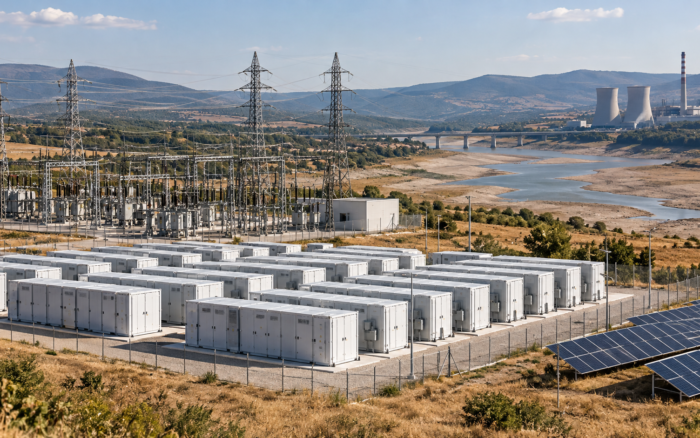
This is where the data center market is beginning to divide. Some locations have land, political ambition and demand, but not enough grid capacity. Others have strong connectivity, but slow connection timelines. A third group may have renewable energy projects in development, but not the transmission infrastructure needed to bring that power to industrial-scale users.
For AI data centers, these gaps are not minor details. They can decide whether a project moves forward or disappears into a waiting list.
Romania’s current advantage, according to the forum discussion, lies in its ability to offer energy capacity in less congested zones, particularly in western and central parts of the country. The original report points to the possibility of hundreds of megawatts being accessible through faster connection agreements, with some projects potentially becoming operational within 18 to 20 months.
Those timelines are significant because they contrast sharply with delays reported in more mature Western European markets, where grid connection for large users can take several years.
Why Romania Has Entered Europe’s AI Infrastructure Conversation?
Romania’s case is useful because it shows how quickly the priorities of the industry are shifting. The country is not being discussed only because it has land. Many countries have land. It is being discussed because energy availability, grid access and development speed are becoming more important in the AI infrastructure race.
The phrase “new Norway” is useful, but it should not be read too literally. The comparison is less about geography and more about timing. Countries that can convert available energy into digital capacity quickly are becoming more visible to investors, operators and hyperscale companies.
This is not a simple national success story. Romania still has to prove that its energy advantage can be translated into reliable, permitted and scalable infrastructure. Grid readiness must be real, not theoretical. Permitting must be predictable. Fiber connectivity must support international demand. Cooling strategies must match the requirements of high-density environments.
Still, the fact that Romania is now being discussed in this way matters. It shows that the map of European data center investment is no longer fixed around the traditional hubs alone.
AI Is Changing the Physics of Data Center Infrastructure
AI data centers are different from traditional data centers. They are denser, more power-intensive and more sensitive to the design of electrical and cooling systems.
GPU-based workloads place heavy demands on rack-level power. They also produce heat in ways that make cooling strategy central to the economics of the facility. At the Romanian forum, NVIDIA’s Rod Evans was cited as saying that the latest generation of technologies increases consumption per rack and makes liquid cooling a necessity rather than an optional upgrade.
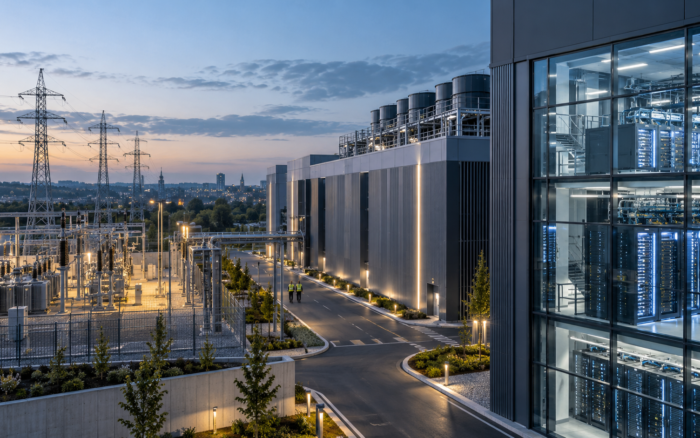
This is a practical issue, not only a technical one. A site that can support a conventional enterprise data center may not be ready for an AI factory. The power supply may be too limited. The substation may not allow future expansion. The cooling design may be insufficient for high-density halls. The permitting path may not have considered water use, backup systems or the level of electrical redundancy required.
In the AI era, these questions have to be asked before land is bought, not after construction begins.
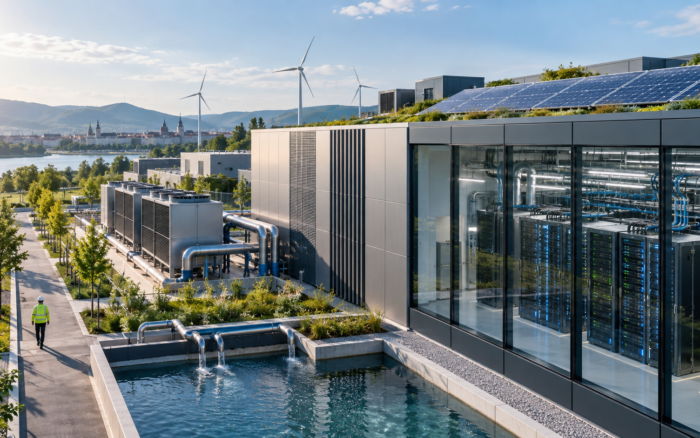
That is why data center infrastructure is now tied more closely to energy infrastructure. Power supply, security service, networking equipment, cooling capacity, renewable energy options and long-term scalability cannot be treated as separate technical details. They form the investment case itself.
CEE’s Opportunity Is Real, but Not Automatic
The opportunity is not purely Romanian. It says something wider about Central and Eastern Europe.
For much of the last decade, CEE was often described as an emerging data center region. That description was partly accurate, but incomplete. The region had growing digital demand, improving connectivity, competitive land costs and an expanding pool of technical talent. What it did not always have was the scale of demand or the hyperscale momentum seen in Frankfurt, London, Amsterdam, Paris and Dublin.
AI may be changing that balance. Not because CEE has suddenly become a replacement for Western Europe, but because the requirements of the industry have changed. When electricity becomes the first question, the map starts to look different.
The region has room to develop, but it cannot rely on availability alone. Major AI and hyperscale investors will look for evidence, not slogans. They will want clear connection timelines, resilient power supply, credible renewable energy options, mature operational planning and an environment that can support critical infrastructure over decades.
A market can have land, demand and ambition, yet still lose projects if it cannot deliver power. Another market can move from the edge of the map to the centre of investor attention if it can prove that energy, infrastructure and execution are already aligned.
Why Powered Land Is Becoming Strategic Infrastructure?
The idea of powered land becomes central. The term can sound simple, but it carries a lot of weight. It does not mean land with a nearby cable. It means a site where power availability, grid connection, permits, fiber access, energy resilience and future scalability have been assessed as part of one infrastructure plan.
For investors, this changes the meaning of location. A cheaper parcel of land may be expensive if it cannot be energized in time. A remote site may be attractive if it has access to power, cooling potential and fiber routes. A market that once looked secondary may become strategically relevant if it can offer what constrained hubs cannot: a realistic path from project announcement to live capacity.
This also changes the role of renewable energy. It is no longer only a sustainability argument. It is becoming part of long-term power security, cost control and energy strategy. For AI data centers, where energy consumption can be large and continuous, the quality of the energy plan may matter as much as the quality of the building.
What This Means for Power Loop Readers?
For Power Loop readers, the Romanian example is useful not because it presents a single national success story, but because it reveals a wider shift in the data center market. AI infrastructure is changing the questions that investors, operators and developers now have to ask before a project begins.
Land availability still matters. Fiber connectivity still matters. Permitting, construction capacity and regional demand still matter. But none of them can compensate for a site that cannot be powered at the required scale, within a realistic timeframe.
This is where the conversation becomes especially relevant for Central and Eastern Europe. The region has often been discussed through the lens of cost, location and emerging digital demand. The next phase will be more demanding. It will require locations where power supply, grid access, renewable energy options, cooling strategy, security service, networking equipment and long-term scalability are assessed together, not as separate details added late in the process.
For AI data centers, this distinction is critical. High-density workloads place a different kind of pressure on infrastructure. They require more careful planning around energy consumption, electrical redundancy, cooling capacity and operational resilience. A site that looks attractive on paper may become difficult to develop if the grid connection is uncertain, if future expansion is limited, or if the energy strategy does not match the expected load profile.
That is why the debate around Romania should be read as more than a local market story. It is a signal for the wider CEE data center landscape. The most competitive locations in the coming years may not be those that simply offer available land, but those that can demonstrate credible readiness: access to power, a clear route to permits, resilient infrastructure, fiber connectivity and the ability to support both traditional data centers and the next generation of AI data centers.
For Power Loop’s audience, the value of this discussion lies in its timing. The market is moving quickly, but not blindly. Serious investors will increasingly look for sites where energy, land and digital infrastructure are already aligned. Understanding that shift helps readers evaluate future opportunities with more precision, especially in a region where the window for attracting major data center investment may be open, but will not remain open indefinitely.