In June 2025, Europe reached a milestone few predicted would come so soon. For the first time, solar power produced more electricity than nuclear energy across the European Union. Data from Eurostat show that solar accounted for 22% of total generation, just ahead of nuclear at 21.6%. Wind followed with 15.8%, hydropower with 14.1%, and natural gas with 13.8%.
It was not a sudden surprise. The shift had been building for years through falling technology costs, strong policy support and a wave of installations stretching from Portugal to Poland. What began as an environmental goal has quietly become the backbone of the European grid.
Key Highlights
June 2025 Becomes a Benchmark Month
Eurostat confirms that June delivered record solar output across the continent. Southern Europe enjoyed long daylight hours and near-perfect weather conditions, while countries in the north saw their most productive solar season yet. Thousands of distributed projects, both urban and rural, contributed to the milestone.
Engineers point out that this achievement reflects the maturity of the sector rather than a single exceptional month.
Renewables Pass the 50 Percent Mark
Across the second quarter of 2025, renewables supplied 54% of the EU’s net electricity, compared with 52.7% a year earlier. Solar generation reached 122,317 gigawatt hours, nearly one fifth of the total. Analysts say this share is large enough to prove renewables can now handle base demand under normal conditions.
Bulgaria Expands Its Renewable Base
Bulgaria’s performance followed the continental trend. Around 42% of its electricity in the same period came from renewable sources, roughly five points higher than in 2024. Much of this growth came from new solar parks in the south and better output from hydro plants during a wetter spring. Officials in Sofia describe the data as evidence that investment in grid-scale projects is beginning to pay off.
Different Speeds Across Europe
Denmark continued to dominate with 94.7% of electricity from renewables, followed by Latvia at 93.4% and Austria at 91.8%. Croatia and Portugal also exceeded 85%. By contrast, Slovakia managed 19.9%, while Malta and the Czech Republic stayed near 21–22%. The disparity highlights the uneven geography of Europe’s transition and the influence of national energy policies.
The Composition of Europe’s Renewable Mix
Solar power now makes up 36.8% of all renewable generation, with wind contributing 29.5% and hydropower 26%. Combustible renewables, such as biomass and biogas, add 7.3%, while geothermal remains minimal at 0.4%. The balance illustrates how solar and wind have become the twin engines of Europe’s green transition, supported by hydro as a natural stabilizer.
Clarifying Eurostat’s Methodology
The agency notes that its figures measure renewables in net electricity generation, not in gross final energy consumption. The difference is important because the latter includes imports, exports and end-use patterns, forming the official benchmark for EU renewable targets.
Why this matters for Power Loop readers
A Structural Change, Not a Temporary Spike
The June figures mark more than a bright summer. They indicate a structural change in Europe’s energy landscape. Nuclear power has long been the symbol of reliability, yet the consistency of solar output and grid integration now rivals it. In practical terms, solar energy has become an indispensable part of Europe’s base generation mix.
New Opportunities for Central and Eastern Europe
For investors, the data suggest that markets once seen as secondary are gaining momentum. Bulgaria, Romania and Greece have begun attracting international developers interested in large-scale solar projects. As interconnection capacity grows, these countries could play a larger role in balancing regional power flows.
Infrastructure and Market Readiness
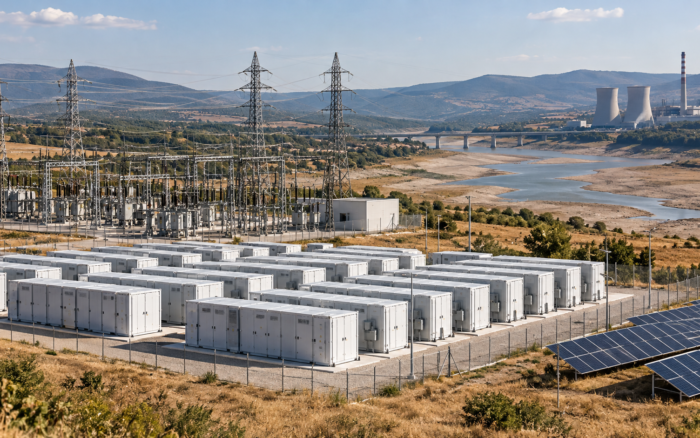
The success of solar brings new challenges. Grid stability will depend on how quickly Europe can expand storage, strengthen transmission lines and modernize market rules. Experts warn that without parallel investment in infrastructure, progress could slow despite growing generation capacity.
An Economic and Strategic Advantage
The economic impact of cheaper renewable power is already visible. Industries dependent on energy-intensive processes are beginning to relocate production within Europe, taking advantage of lower costs and greater security of supply. For policymakers, this is a reminder that clean energy is no longer just an environmental issue but also a driver of competitiveness.
Source Listing
Eurostat.eu – “Solar energy surpasses nuclear as EU’s top electricity source in June 2025” (Q2 2025 data release) – https://ec.europa.eu/eurostat