Ask a data center developer what kills deals these days, and the answer is rarely the price of dirt. It is the wait for electrons. The International Energy Agency expects global electricity use by data centers to roughly double between 2024 and 2030, to around 945 terawatt hours, a bit more than what Japan consumes in a year. Money is available. Demand is obvious. What stalls projects is the gap between buying a site and actually energizing it, a gap now measured in years in some markets.
So the industry’s mental model of land has quietly changed. The land itself is no longer the full asset. Deliverability is the asset. A parcel is worth what it can deliver, in megawatts, in fiber, in permits, and in how fast.
Data Center Trends Are Rewriting the Value of Land
Several of the big data center trends point in the same direction and reinforce each other. AI training and inference need dense, hungry compute. Cloud computing keeps swallowing enterprise IT. Digital transformation moves entire industries onto hosted platforms. Users want low latency, which pushes some capacity toward the edge, while AI training pulls the other way, toward campuses planned in hundreds of megawatts.
Put together, the data center boom has produced an odd new form of land competition. Ordinary industrial land is everywhere. Land within reach of a substation, a transmission corridor, long-haul fiber, distribution lines, or renewable energy sources is scarce, and its owners know it. Two parcels a few kilometers apart can differ in value several times over for reasons invisible in a property listing.
Why Data Centers Need More Than Available Land?
Plenty of parcels that look fine on paper fail the test. The nearest substation may have no spare capacity, or capacity already promised to someone else. Fiber may run past the boundary without a practical splice point. Zoning may allow a warehouse but not a facility that hums around the clock. Environmental checks can surface wetlands or noise limits that shrink the buildable footprint. And water availability quietly decides which cooling designs are even on the table; in dry regions, that single factor removes otherwise strong sites from consideration.
Then there is the unglamorous part. Heavy transformers and switchgear arrive on long lead times, so supply chains get planned early. A multi-year build needs road access for oversized loads and a deep enough pool of local skilled trades.
Serious buyers now treat data center land as an energy and infrastructure asset first and a real estate asset second. The right question is not what the land is. It is what the land can deliver, how much, and by when.
Power Availability Has Become the Central Site Selection Question
Data centers consume vast amounts of electricity, and AI raises the stakes. The IEA projects that electricity use by AI-focused facilities will more than quadruple by 2030. High-density racks built for accelerated computing draw far more power per square meter than conventional enterprise IT, and every extra kilowatt of compute drags cooling load along with it.
The grid is where ambition meets physics. In Northern Virginia, the largest data center market in the world, the regional utility has warned that large new loads may wait up to seven years for a connection. Ireland’s grid operator restricted new connections around Dublin outright. A hyperscale facility can go up in 18 to 24 months. A major transmission upgrade routinely takes seven to ten years. That mismatch, not a shortage of capital or customers, is what slows data center expansion in mature hubs.
Energy companies have moved to the center of the table, shaping which data center projects survive through interconnection studies, substation planning, and investment in distribution lines. For buyers, the lesson is blunt. Speed to power beats price. A cheap site with uncertain power can end up costing more than a premium site with a credible path to energization, once you add financing carry, lost revenue, and the customers who signed elsewhere while you waited.
Powered Land Is Becoming a Distinct Investment Category
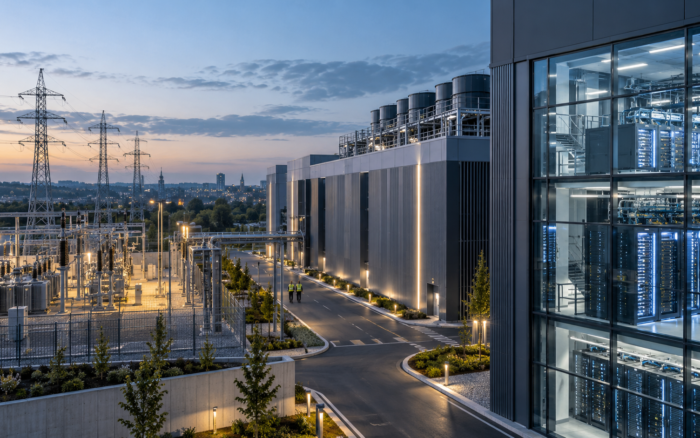
The market has started pricing that certainty directly, and the label it uses is powered land. The term gets abused. Powered land is not land that happens to sit near electricity. It is land with a credible, commercially useful path to sufficient capacity: an interconnection position that exists or is realistically obtainable, proximity to substations or transmission, and a utility willing to put timelines and upgrade costs in writing.
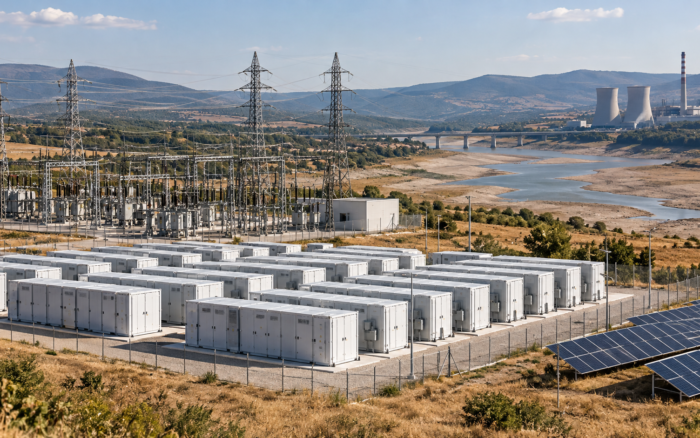
What separates the genuine article from the marketing version? Documented capacity commitments rather than assurances. Room for batteries, on-site generation, or hybrid supply to bridge grid timelines. Access to renewable energy sources that tenants can count toward their own targets. Permitting visibility, so entitlement risk is measured, not guessed. And enough contiguous acreage for phased data center development, since operators increasingly buy for buildings two and three, not just building one.
The investor case is plain risk arithmetic: powered land compresses the least predictable stretch of the timeline. Buyers pay for that.
Data Center Development Is Now a Permitting and Community Challenge
A secured megawatt does not guarantee a smooth path on the ground. Permitting has grown more demanding as jurisdictions learn what these facilities involve. Environmental checks stretch out where water shortages, habitat, or noise rules apply. Communities do their own math, weighing tax revenue against grid impact, construction traffic, carbon emissions, and the awkward fact that data centers employ fewer people long-term than their footprint implies. Several mature markets have watched projects get delayed or redesigned under local pressure.
None of that is a reason to avoid data center development. It is a reason to treat social license as part of site selection rather than an afterthought. Projects that engage early, design for noise and sightlines, commit to water-efficient cooling, and put real local benefits on the table tend to move. Projects with capital and engineering but no community support carry a schedule risk no balance sheet can hedge.
Critical Infrastructure Priorities Are Changing the Data Center Industry
Governments have started treating digital infrastructure the way they treat power networks and ports. Data centers now sit underneath cloud computing, financial systems, hospital records, educational institutions, and the connectivity behind emerging technologies from autonomous vehicles to industrial AI. Concentrate that much of the digital economy in physical buildings, and the buildings become critical infrastructure, and critical infrastructure priorities start deciding where and how they get built.
Among the more consequential data center industry trends is this convergence of the data center sector with energy policy and regional planning. Some jurisdictions fast-track projects that bring investment, construction jobs, and grid upgrades. Others cap connections to protect households. The same parcel can be a fast-track asset in one county and a stranded one across the line, which makes the host region’s policy posture as material as anything physical about the site.
Cooling, Power Usage Effectiveness and the New Design Logic
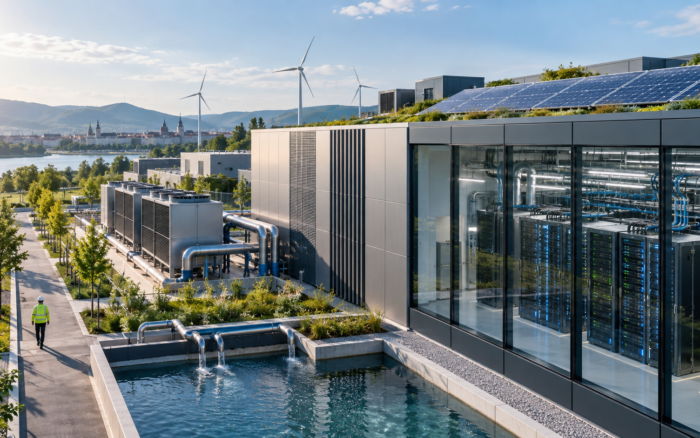
High-density AI infrastructure is forcing a mechanical rethink. Air cooling runs out of headroom as rack densities climb, so liquid cooling, direct-to-chip systems, and immersion cooling are moving from experiment to standard practice in advanced facilities. Closed-loop designs cut water draw, and modular construction lets operators repeat a proven mechanical design across sites.
Power usage effectiveness is still the headline metric, but operators now track water use and carbon emissions with the same seriousness, because those numbers show up in permit hearings and operating costs, not just sustainability reports.
Here is the part land buyers miss: cooling strategy is a site attribute. A parcel with strong power but weak water resilience and no room for alternative cooling may be worth less than it looks. Diligence has to model the mechanical design a site can actually support, not only the electrical supply it can attract.
Digital Twins and Predictive Maintenance Improve Operations, Not Site Fundamentals
Operators are getting real value from digital twins that model electrical and thermal behavior, from predictive maintenance that flags equipment drift, and from AI-driven monitoring that tunes energy and cooling in real time. Downtime falls, and efficiency improves.
None of it fixes a bad site. A digital twin cannot conjure grid capacity, and no maintenance algorithm has ever shortened a permitting dispute. Operational technology raises the ceiling of a well-chosen site. It does nothing for the floor of a poorly chosen one.
Emerging Markets and the Geography of Future Growth
Constraints in the mature hubs are redirecting capital. Regions offering spare grid capacity, developable land, renewable energy potential, and cooperative permitting are pulling projects away from the established hubs. Southeast Asia, parts of Southern and Eastern Europe, the Nordics, and several Middle Eastern markets all show the pattern. Where energy readiness meets land availability, data center capacity follows.
The bar does not drop in emerging markets. Reliable access to energy and fiber, political stability, and workforce depth still decide outcomes. But the next few years look likely to reward regions that pair those fundamentals with permitting clarity, because future growth flows to wherever deliverability is highest.
What Investors Should Evaluate When Acquiring Land for Data Center Projects?
Diligence when acquiring land starts with power, because everything else depends on it. That means capacity available today, a documented route to more, a connection timeline confirmed with the utility rather than read off a map, and a hard look at nearby substations, distribution and transmission infrastructure.
Connectivity and cooling come next. Fiber should be present with genuine route diversity, and the water and cooling strategy has to match the density the project intends to serve.
The regulatory and social layer deserves equal weight: environmental and permitting risks quantified with local counsel, community sentiment tested early, and the carbon and sustainability requirements of likely tenants understood before design begins.
The commercial layer closes the loop. Site size, geometry, and expansion room for phased builds. Construction logistics and the depth of local skilled labor. Exposure to equipment supply chains, and whether the project can embed resilience through storage, backup generation, or hybrid supply. Sites that clear every test are rare. That scarcity is exactly what makes them investable.
The Strategic Value of Data Center Land
The thread running through all of this is short. A data center is only as strong as the ground beneath it, and that ground earns its value through deliverability: shorter development timelines, lower entitlement risk, confirmed power, room for phased growth, and a fit with tenant expectations on efficiency and sustainability. Land with those qualities hands developers schedule certainty, lets operators bring capacity online when customers want it, and offers investors an asset priced on infrastructure fundamentals rather than real estate mood.
The next phase of data center development will not be won by whoever finds the cheapest land. It will be won by whoever controls the most credible path to power, capacity, resilience, and operational readiness.
Sources consulted:
- International Energy Agency, Energy and AI (2025), global data center electricity demand projections to 2030: https://www.iea.org/reports/energy-and-ai/executive-summary
- International Energy Agency, Key Questions on Energy and AI (2026 update): https://www.iea.org/reports/key-questions-on-energy-and-ai/executive-summary
- Belfer Center for Science and International Affairs, Harvard Kennedy School, analysis of data center growth, grid connection queues and transmission timelines in Virginia and Texas: https://www.belfercenter.org/research-analysis/data-centers-texas-virginia-comparison